Application Modernisation & Custom Software
Ricksoft Singapore is a software engineering consultancy that modernises ageing business applications, builds custom software where nothing off-the-shelf fits, and maintains business-critical systems long after they go live. This is the delivery end of digital transformation — the applications a business actually runs on, and the ones that cannot be switched off for a quarter while something new is built.
We do not build and walk away. Systems we delivered years ago are still in production and still under our care, and that continuity is the point: software is only finished when it is retired, and most of its cost arrives after launch.
Where are you starting?
Most conversations begin from one of three places. Each leads somewhere different, so it is worth naming yours early.
Modernise what you have
The system still does its job, but the framework is out of support, the deployment is fragile, and changes have become slow and risky.

Build what doesn't exist
The process that differentiates your business does not fit any product on the market, and bending it to fit one would cost you the advantage.

Keep it running
Something business-critical needs an owner — often because the people who built it have moved on. See support and maintenance.
What this work delivers
Modernisation earns its budget in operating cost, delivery speed and risk removed — not in architecture diagrams.

Lower running cost
Moving Beam&Go from server-based hosting to a cloud-native platform cut hosting costs by nearly 70%.

Faster, safer delivery
CI/CD and automated testing more than doubled Beam&Go's deployment frequency and took rollbacks to near zero.

Risk removed
End-of-life frameworks, unpatched dependencies and undocumented deployment steps stop being things you hope nobody tests.

Software that fits the business
Custom-built systems encode how you actually work, rather than forcing the process to bend around a product's assumptions.
Our Services
From the first audit through to the system still running in five years.
Application Modernisation & Re-platforming
Bringing an existing system onto supported frameworks and modern infrastructure — incrementally, with the application in production throughout.
Custom Software Development
Bespoke web and mobile applications built around the process that differentiates you, delivered in working increments rather than one release.
Integrations & APIs
Connecting the systems that hold your data — ERP, finance, service management and third-party platforms — so work stops moving by spreadsheet.
Data Migration
Moving data between systems with reconciliation and integrity checks, so the numbers after the migration match the numbers before it.
Cloud & Delivery Infrastructure
CI/CD pipelines, containerisation, environment automation and monitoring on AWS — the plumbing that makes frequent releases safe.
Application Support & Maintenance
Ongoing ownership of a live system — patches, dependencies, fixes and enhancements. See the tiers below.
Start With Evidence, Not an Estimate
The Application Modernisation Assessment reviews your portfolio and returns a costed roadmap with an explicit verdict on every system — rebuild, replace, retain or retire.
Support & maintenance
Most application support enquiries start the same way: the person who built it has left. The system still runs, nobody wants to touch it, and every small change has become a negotiation. We take ownership of software in exactly that condition — including software we did not write.
Support runs as a monthly retainer across three tiers, differentiated by response commitment and scope rather than by hours consumed. Billing by the hour turns every month into an argument and penalises us for being efficient.
Sustain
Keep it running and keep it safe: security patching, dependency updates, monitoring, and resolution of faults as they arise. Business-hours response.
Evolve
Everything in Sustain, plus a monthly allocation of enhancement work — the small changes and features that otherwise queue up for a project that never gets funded.
Managed
Everything in Evolve, plus extended-hours response, formal service levels, and a quarterly roadmap review with the people who own the system's direction.
We quote the tier and the monthly figure after an Application Health Check — a one-week audit of the code, dependencies, security posture and deployment path. Pricing support before anyone has looked inside the system produces a number that is either padded or unsustainable, and neither serves you.
How we work
Five stages, and the last one does not end.
- 1
Assess
We inspect what exists — code, dependencies, data, integrations and deployment — and establish what the business actually needs the software to do. Findings come with estimates attached.
- 2
Design
We agree the target architecture and, more importantly, the sequence to reach it without an outage — which components move first, what runs in parallel, and how we roll back.
- 3
Build & iterate
We deliver in working increments you can use and review, rather than a single release at the end. Automated tests and pipelines go in early, because they are what make later changes cheap.
- 4
Release
We cut over with a tested rollback path, reconcile the data, and hand over documentation your team can actually use — written during the work, not reconstructed afterwards.
- 5
Support
Where you want us to stay, the system moves onto a support tier and keeps improving. Most of an application's life happens after launch, and most of its cost does too.
Two systems we built and still run
Both remain in production. That is the part worth checking when you choose who builds your software.

Jet Tracker Takes Off: Turning Flight Paths into Financial Insights
Gordon Haskett Research Advisors are New York based leaders in institutional investment research. In-depth and independent analysis for several major verticals from Retail, Consumer Internet and Capital, Insurance, F&B, Legal and Internet. In 2021, Ricksoft Singapore collaborated with research analysts and developed their proprietary Jet Tracker App which tracks private jets of publicly traded companies. Ricksoft Singapore's Agile best practice and high code quality meant short time to market and rapid adoption. Now a publicly available subscription service, processing flight data from around the world, Gordon Haskett Research customers benefit from Jet Tracker's unique insights.
Modern Delivery: Beam&Go Cut Costs by 70% and Doubled Dev Speed
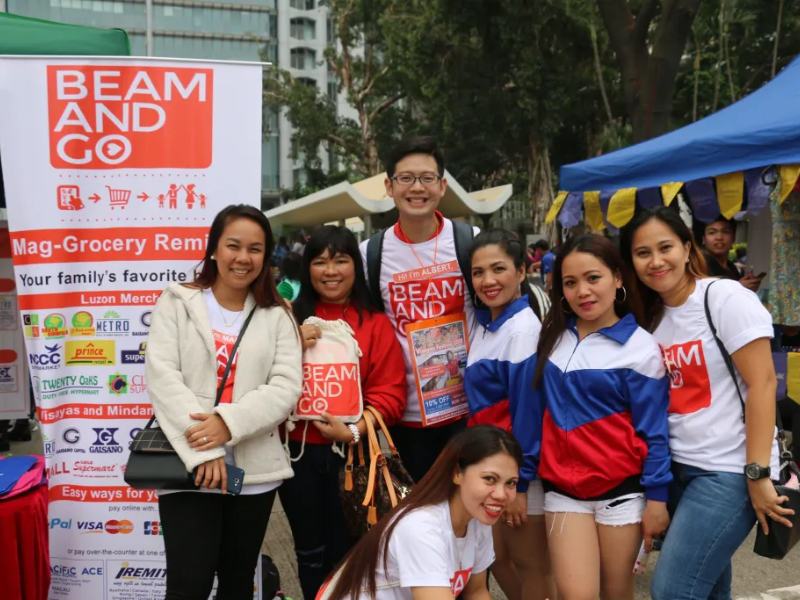
Ricksoft Singapore has been a strategic partner to Beam&Go since its inception, driving the company's evolution as a FinTech and eCommerce marketplace connecting overseas Filipino workers (OFWs) with merchants in the Philippines. Through our expertise and collaboration, Ricksoft Singapore successfully transitioned Beam&Go from a traditional server-based environment to a fully Cloud-native infrastructure with Continuous Integration and Delivery (CI/CD) and automated testing. This transformation resulted in almost 70% in hosting cost savings, more than doubled developer productivity and deployment frequency, and reduced deployment rollbacks to near zero.
Our Offices
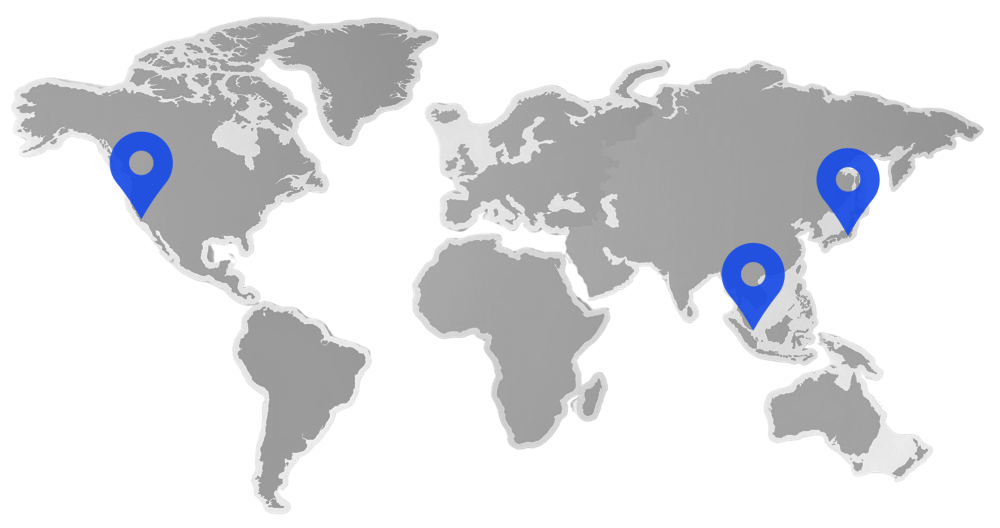
We maintain a strong global presence across Singapore, California, and our group headquarters in Tokyo, enabling us to deliver seamless, localised support and strategic solutions across key markets.

Singapore
Ricksoft Singapore Pte. Ltd.
1002 Jalan Bukit Merah #06-19
Singapore 159456
+65 8086 7376 (WhatsApp)
San Fransisco, California
Information Officer LLC (a Ricksoft group company)
PO Box 5021
Berkeley, California 94705, USA
+1 (212) 913-0469
Tokyo, Japan (Group Headquarters)
Ricksoft Co., Ltd.
2-1-1 Otemachi, Chiyoda-ku
Tokyo 100-0004, Japan
+81 3-6262-3947
Frequently asked questions
What is application modernisation?
Application modernisation is the work of bringing an existing business application up to current standards of security, maintainability and performance — without discarding the business logic it already encodes. In practice it ranges from re-platforming onto modern infrastructure, to re-architecting a monolith into services, to incrementally replacing parts of a system while it stays in production. It is distinct from a rewrite, which starts again from nothing and carries far more risk.
Should we modernise our existing system or rebuild it from scratch?
It depends on whether the business logic inside the system is still correct. Where the rules the software encodes are sound and only the technology around them has aged, modernising is almost always cheaper and lower risk — a rewrite means rediscovering years of accumulated edge cases that nobody documented. Where the process itself has changed beyond what the system can express, rebuilding is the honest answer. Our Application Modernisation Assessment gives each application an explicit verdict: rebuild, replace, retain or retire.
Do you take over software that someone else built?
Yes — inherited systems are one of the most common reasons clients come to us. We start with an Application Health Check: a one-week audit of the codebase, dependencies, security posture, deployment process and documentation, ending in a risk register and a support recommendation costed against the system's actual condition rather than a description of it.
What if there is no documentation and the original developer has left?
This is the normal starting condition rather than the exception. The Health Check treats undocumented knowledge as an explicit risk to be measured and reduced: we work through the codebase, the deployment path and the running environment to reconstruct how the system actually behaves, then write that down. For most inherited applications, key-person risk turns out to be the largest item on the register and the first one worth funding.
How do you price application support and maintenance?
Support is a monthly retainer across three tiers — Sustain, Evolve and Managed — differentiated by response commitment and scope rather than by hours consumed. We quote the tier and the monthly figure after the Application Health Check, because a retainer priced before anyone has inspected the system is either padded or unsustainable. Tiering on scope rather than hours also avoids turning every month into a billing argument.
How long does an application modernisation project take?
A contained piece of work — re-platforming an application onto modern infrastructure, or replacing a single problematic component — typically runs 6 to 12 weeks. Modernising a business-critical system with multiple integrations and a migration path that must not interrupt operations usually runs 4 to 9 months, delivered incrementally so value arrives before the end. We size this during the assessment rather than estimating from a brief.
Do you work with our existing development team or replace it?
Either, and the choice is yours. We frequently work alongside an in-house team — taking the modernisation workstream so their capacity stays on new product, or pairing with their engineers to transfer knowledge as we go. Where there is no team, we take full ownership of build and support. What we avoid is the arrangement where knowledge leaves with us at the end: handover documentation and your team's ability to maintain what we built are part of the engagement, not an afterthought.
What technologies do you work with?
We work across mainstream web, mobile and cloud stacks, and we deploy predominantly to AWS. Rather than leading with a technology preference, we assess what your system already uses and what your team can realistically maintain — choosing a stack your people cannot support is a common and expensive mistake. Where the work touches service management or the Atlassian toolchain, our ITSM and Atlassian practices are part of the same team.
Inherited Something You'd Rather Not Own Alone?
Start with a one-week Application Health Check. You get a risk register, remediation estimates, and a support figure sized against what the system actually is.