Becoming an AI-Native organisation
Ricksoft Singapore is an AI consultancy that helps organisations move from scattered AI experiments to workflows genuinely redesigned around AI — and then to an operating model that assumes it. We work on the processes, decision rights and governance that determine whether AI produces measurable change or just faster first drafts.
Most organisations that are disappointed by AI did not buy the wrong tool. They gave capable people access to a capable tool and changed nothing else about how the work moves — so the fastest step got faster, and everything downstream stayed exactly as slow as it was.
The three stages of AI maturity
Almost every organisation we meet places itself further along this model than it is. The gap between stage one and stage two is where most of the value sits, and it is a workflow problem rather than a technology one.
AI Tools
Where most organisations actually are
Individuals use AI on their own initiative. The gains are real but fragmented, invisible to the organisation, and dependent on who happens to be curious. Nothing about how work moves has changed.
AI Workflows
Where the return starts
Specific processes are redesigned so AI is a defined step in how the team works — with handoffs, review points, approval gates and measurement. The workflow, not the individual, becomes faster.
AI-Native Organisation
Where it becomes an operating model
Roles, decision rights and governance assume AI is doing part of the work. The question shifts from which tasks AI can help with to which decisions still need a human, and why.
Our AI-Native Services
Sequenced to move you one stage at a time, with the governance built in rather than retrofitted.
AI-Native Readiness Assessment
Where you sit on the maturity model, which processes would repay redesign first, and what data and governance foundations already exist.
Workflow Redesign
Rebuilding a process around what AI now makes cheap — including the review cadence, approval thresholds and turnaround expectations that were set for the old speed.
Agent Design & Implementation
Where the redesigned workflow needs software that takes action rather than drafts text, our agentic AI practice builds and deploys it.
Governance & Human-in-the-Loop
Approval gates, audit trails and escalation paths so AI-driven work stays accountable — usually built on the service management platform you already run.
Team Enablement
Practical enablement built on your real work rather than generic prompt training, so the redesigned workflow survives after we leave.
Measurement & Value Tracking
Baselines agreed before the work starts and measured against the process — cycle time, rework and cost per transaction, not licence counts.
Find Out Which Stage You're Actually At
The AI Readiness Assessment establishes where you sit on the maturity model, which processes would repay redesign first, and what has to be true before any of it scales.
The governance layer
As AI moves from drafting text to taking action, the question stops being what it can do and becomes what it is allowed to do without asking. That is an approval, audit and escalation problem — and it is the one most AI programmes discover last.
Organisations running a mature service desk already own most of the answer. Change management, SLAs, audit trails and escalation paths were built to keep people accountable to each other; applied to agents, they are what makes autonomy safe to grant. We build the governance layer on the platform you already run rather than alongside it — which is why our ITSM practice and this one are the same team.

Jira Service Management
Approvals, change management and audit trails on the platform most of our clients already run — and where Atlassian's own Rovo agents are logged as attributable actions.
Read more
ONES.com
Project, wiki and service desk in one suite, with cloud or on-premise deployment where agent activity and data must stay in-country.
Read more
HaloITSM
Deep ITIL process coverage out of the box, giving agent-initiated changes the same approval and escalation path as human-initiated ones.
Read moreHow we work
One workflow at a time, measured against a baseline you agreed before we started.
- 1
Locate
We establish where you genuinely sit on the maturity model, what people are already doing unofficially, and which processes are high-volume enough for redesign to matter.
- 2
Redesign
We rebuild one workflow around the new capability — including the review points, approval thresholds and turnaround expectations that were set when the work was slower.
- 3
Build & govern
We implement the tooling or agents the redesign needs, with approval gates, logging and escalation paths designed in from the start rather than added once something goes wrong.
- 4
Measure
We report against the Week 1 baseline using process measures rather than adoption statistics, so the decision to extend or stop is made on evidence.
- 5
Extend
With one workflow working and measured, the pattern — and the governance that made it safe — becomes the template for the next. This is how stage two turns into stage three.
Our Offices
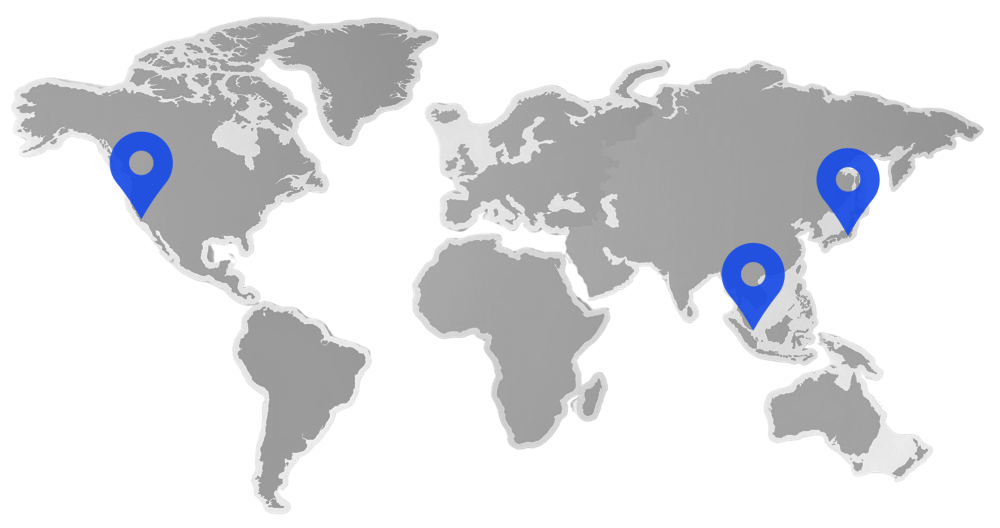
We maintain a strong global presence across Singapore, California, and our group headquarters in Tokyo, enabling us to deliver seamless, localised support and strategic solutions across key markets.

Singapore
Ricksoft Singapore Pte. Ltd.
1002 Jalan Bukit Merah #06-19
Singapore 159456
+65 8086 7376 (WhatsApp)
San Fransisco, California
Information Officer LLC (a Ricksoft group company)
PO Box 5021
Berkeley, California 94705, USA
+1 (212) 913-0469
Tokyo, Japan (Group Headquarters)
Ricksoft Co., Ltd.
2-1-1 Otemachi, Chiyoda-ku
Tokyo 100-0004, Japan
+81 3-6262-3947
Frequently asked questions
What does AI-Native mean?
AI-Native describes an organisation whose workflows, roles and decision rights have been redesigned around AI, rather than one that has simply given its people access to AI tools. The distinction matters because the two produce very different results: tool access makes individual tasks faster, while an AI-native operating model changes how work moves through the organisation. Most businesses that report disappointing AI returns have done the first and assumed it would produce the second.
Why do AI rollouts stall after the pilot?
Because the pilot proves the tool works, and nothing downstream changed to absorb it. The approval chain still has the same number of sign-offs, review still runs on the same weekly cadence, and the standard for what is good enough to ship still sits with the same person. Drafting gets faster and then the work waits, so cycle time barely moves. Getting past that point is a workflow and decision-rights problem, not a tooling one.
What are the three stages of AI maturity?
Stage one is AI Tools: individuals use AI on their own initiative, and results are real but fragmented and invisible to the organisation. Stage two is AI Workflows: specific processes are redesigned so AI is a step in how the team works, with defined handoffs, review points and measurement. Stage three is AI-Native: the operating model itself assumes AI, with roles, governance and decision rights built around it. Most organisations are at stage one and believe they are approaching stage three.
How do you keep humans in the loop as AI takes more action?
By putting approval gates in front of the actions that need them, logging every action an agent takes as an attributable record, and building escalation paths that route uncertain decisions to a person before they become a problem. In practice this is the same machinery that change management, SLAs and audit trails have always provided — applied to a new kind of actor. Organisations with a mature service management platform already own most of the governance layer they need.
Where should we start with AI?
With one workflow that is high-volume, well-understood and currently painful — not with a tool selection. We run an AI Readiness Assessment to establish where you sit on the maturity model, which processes would repay redesign first, and what data and governance foundations are already in place. Starting from a process rather than a platform is what separates the pilots that scale from the ones that quietly end.
Do we need a data science team or a large dataset?
No. Most AI-Native work uses commercially available models applied to your existing processes and documents, which is a systems and workflow integration problem rather than a model training one. A data science team becomes relevant when you need bespoke models on proprietary data — a much later and much rarer requirement than most vendors imply.
How is this different from buying an AI tool for everyone?
Licences are the easy part, and they are where most AI budgets go. What changes outcomes is redesigning the workflow around the new capability, resetting the expectations and turnaround standards that were built for the old speed, and deciding what humans still approve. We do that work alongside the tooling rather than after adoption has already stalled.
How do you measure whether AI is actually working?
Against a baseline agreed before the work starts, using measures tied to the process rather than to the tool. Licence counts and prompt volumes tell you about adoption, not value. Cycle time, rework rate, deflection and cost per transaction tell you whether the workflow genuinely changed. We set that baseline during the assessment so the comparison at the end is meaningful.
Move From AI Tools to AI Workflows
Most of the available value sits in the gap between stage one and stage two. Let's find the workflow where closing it pays for itself.